
Charleston Divorce Lawyer
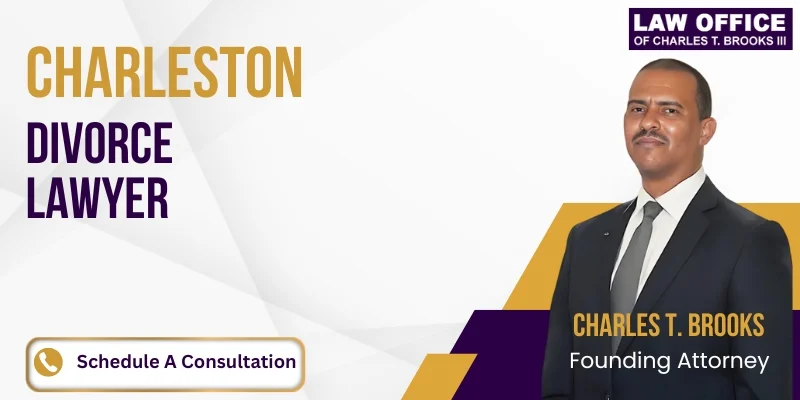
Charleston Divorce Attorney
You built a life together, and now you are thinking about how to divide it. What will happen to the house, the retirement accounts, and the time you get with your kids? You are worried the divorce will drain your savings before it settles anything. You do not know if your spouse will play fair, or if you will end up giving up more than you should just to make it end.
Those are the exact worries people bring to the Law Office of Charles T. Brooks III. Attorney Brooks has practiced law in South Carolina since 1996. He helps people protect what they built and move forward with a plan, not just a piece of paper saying they’re divorced.” naturally added the my keyword
Contact us for a confidential consultation and find out exactly where you stand before you agree to anything.
Charleston Divorce Cases We Handle
Every divorce looks different depending on what you and your spouse can agree on, and what you cannot. We represent Charleston divorce clients in:
- Contested divorce, when you and your spouse cannot agree on the terms
- Uncontested, no-fault divorce, once you have lived apart for a year
- Division of marital property and debt
- Alimony and spousal support
- Child custody, visitation, and support connected to the divorce
Whatever brought you here, the goal is the same: an outcome you can live with once the paperwork is signed, not one you agreed to just to make the process end. We work through each issue on its own terms, and we tell you plainly where you have room to negotiate and where you do not.
What Is at Stake in Your Divorce
South Carolina courts do not automatically split everything down the middle. A judge looks at what each spouse contributed to the marriage, how long you were married, and what each of you will need going forward before deciding who gets what (S.C. Code Section 20-3-620). If you and your spouse cannot agree, that decision gets made by someone who has never met you, based on paperwork and testimony instead of the life you lived together.
Without a divorce lawyer who understands both the financial side and the custody side of your case, you are trusting your future to a process you do not control.
Filing for Divorce in Charleston County
If you file in Charleston, your case is heard at the Charleston County Family Court, 100 Broad Street, Suite 143, Charleston, SC 29401. If you have lived apart, in separate homes, for one full continuous year, South Carolina law lets either spouse file for a no-fault divorce (S.C. Code Section 20-3-10). If you have grounds like adultery or physical cruelty, you do not have to wait out that year, but you will need to prove it.
We help clients figure out which path gets them to a final decree the fastest, based on their specific situation, instead of guessing and losing months along the way. That includes making sure your paperwork is filed correctly the first time, since mistakes in a divorce filing can add weeks to a case that is already hard enough to live through.
FAQs About Divorce Law
What happens when I first talk to a Charleston divorce lawyer?
We ask about your marriage, your finances, and your kids so we understand what you are facing. Then we walk you through the options that fit your situation. You leave that conversation with a plan, not just more questions.
How much does a divorce cost in South Carolina?
It depends on whether you and your spouse agree on the terms or have to work out property, custody, and support in court. A straightforward, uncontested divorce costs far less than one where every issue is disputed. Contact us for a clear breakdown of costs based on your specific situation.
Will this affect my time with my kids?
Custody and visitation are decided separately from your divorce grounds, based on what a judge believes is best for your children right now. We can walk you through what a realistic schedule looks like given your work, your home, and your children’s ages.
Do I need a lawyer if my spouse and I already agree on everything?
Even an uncontested divorce creates a legal agreement that controls your property, your support payments, and your time with your kids for years to come. Having a divorce lawyer review it before you sign protects you if your circumstances change later.
How long does a divorce take in Charleston?
An uncontested, no-fault divorce cannot be finalized until you and your spouse have lived apart for a full year, though fault-based grounds can move faster. Contested divorces involving property or custody disputes usually take longer, depending on the court’s schedule.
Will I lose my house in the divorce?
Not automatically. South Carolina divides marital property based on what is fair, not necessarily equal, weighing what each spouse contributed to the marriage. We can walk you through how that standard is likely to apply to your home and other assets.
What if my spouse does not live in Charleston County?
Where you file can still depend on residency rules, not just where your spouse lives. Contact us and we can tell you exactly where your case belongs.
Talk to a Charleston Divorce Lawyer Today
You do not have to decide anything today. What you do need is a clear picture of your options, your rights, and what is realistically ahead of you, so you can make each decision with your eyes open instead of guessing. Contact the Law Office of Charles T. Brooks III to schedule a confidential consultation and find out exactly where you stand before you take your next step.
Office Location
Contact Us Today!
Fill Out Our Contact Form And We Will Respond To You As Soon As Possible.
Fields marked with an * are required
"*" indicates required fields

© 2026 Law Office Of Charles T Brooks III • All Rights Reserved.
Digital Marketing By 
*Images are obtained under license from Canva and other third-party stock image providers, with attribution included where required.